
In April, MiCR launched a new virtual forum series to help programs implement and sustain telehealth services under recently extended Medicare reimbursement policies. In June, MiCR offered the second forum in the series, this time featuring a demonstration of group virtual cardiac rehabilitation (CR) led by Henry Ford Health’s Steven Keteyian, PhD, Director of Cardiac Rehabilitation & Preventive Cardiology, and Robert Berry, MS, ACSM-CEP FAACVPR, Clinical Coordinator for Cardiac Rehabilitation. The demonstration was followed by a discussion led by MiCR’s Co-Directors, Jessica Golbus, MD, MS, and Mike Thompson, PhD, MPH.
Telehealth Group Example
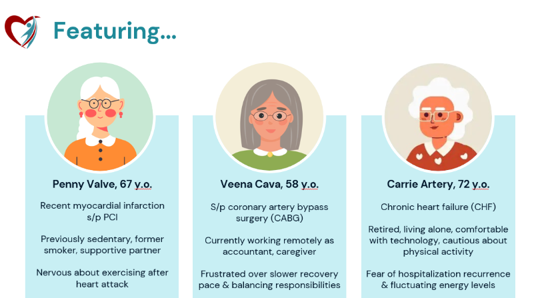
The forum began with a live mock CR telehealth session led by Berry and Keteyian. Three actors representing patients (played by MVC Coordinating Center volunteers) were guided through a simulated telehealth group CR session. After presenter introductions, Berry began the group CR class greeting the patient actors, who each represented a specific patient profile and common cardiac condition (Figure 1).
Figure 1. Patient Profiles for Cardiac Rehabilitation Mock Session
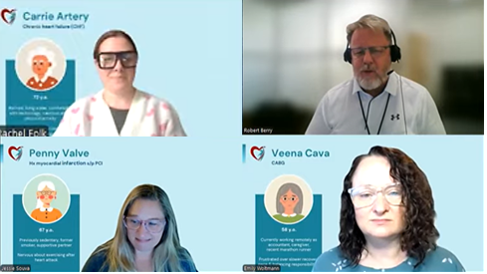
To begin the session, Berry checked in with each patient on the Zoom session to document the type of exercise or equipment they would be using. As Figure 2 shows, the group session looked similar to a Zoom meeting with all patients exercising simultaneously from locations they established with their instructor in advance. Each patient confirmed their exercise modality, weight, and heart rate as they engaged in their chosen activity. Throughout the exercise process, patients were asked questions about how the exercise was feeling and whether it was causing any pain or discomfort. If a patient was having symptoms, Berry would follow up with more specific questions to help pinpoint the problem area and would give advice for either modifying the exercise, utilizing intentional breathing techniques, or taking a break.
Figure 2. Screenshot of Mock Telehealth CR Session
The patients had an opportunity to ask Berry follow-up questions before the end of the session such as:
- How will I know when it’s safe to push harder?
- Should I continue with CR exercises if my energy level is low today?
- When/how do I share my tracked vitals and symptoms with my providers?
- How do I get in touch with you between sessions?
- Can I still participate in virtual sessions if I’m at my home in Florida?
Following the live demonstration, Golbus and Thompson led participants in a question-and-answer discussion that further clarified how virtual and telehealth CR programs can work. Keteyian and Berry shared that patients must be at their home address for certain payers (Medicare/Medicaid), but patients with other insurance such as Blue Cross Blue Shield of Michigan (BCBSM) can be at any location within the state of Michigan.
Some attendees wondered about confidentiality considerations during the group session. Henry Ford Health said their programming has not required participants to sign an additional Health Information Portability Insurance Portability and Accountability Act (HIPAA) release form; however, they do remind patients to be aware of what information they share in the presence of others during the group session. For people who may be uncomfortable sharing personal information such as weight, different wording can be used. For example, “has your weight changed since your last visit?”
For patients who are unsure about participating in a virtual setting, Keteyian pointed out that they often have the patient come into the facility for the first session to participate as if they were at home in a virtual environment. This often alleviates any concerns about fully participating in a telehealth setting in the future. For those patients who do not have exercise equipment at home, Berry shared that patients can usually find some form of exercise equipment to borrow from a family member, church, or neighbor, or will choose to walk during their session.
A poll of participants showed the current state of CR programming for sites represented at the forum (Figure 3-4), with most sites indicating an interest in exploring both group and individual telehealth CR.
Figure 3. Polling Question: What format of virtual CR is your site considering?
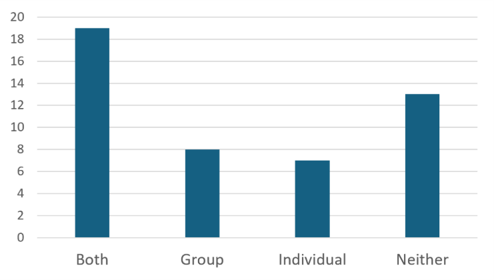
Figure 4. Polling Question: What best describes your site's status on starting a virtual CR program?
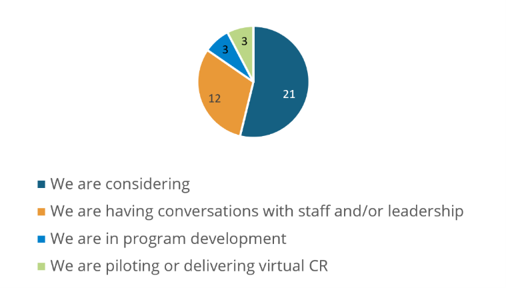
According to the polls, most workgroup participants are still considering CR program development and starting to have conversations with staff and leadership. The MiCR team encouraged participants to take these poll questions back to their teams and leadership to inspire discussion on developing a hybrid or telehealth CR program.
Those who missed it can watch a recording of the second MiCR telehealth forum.
 Spanish
  English
  Arabic
  Chinese